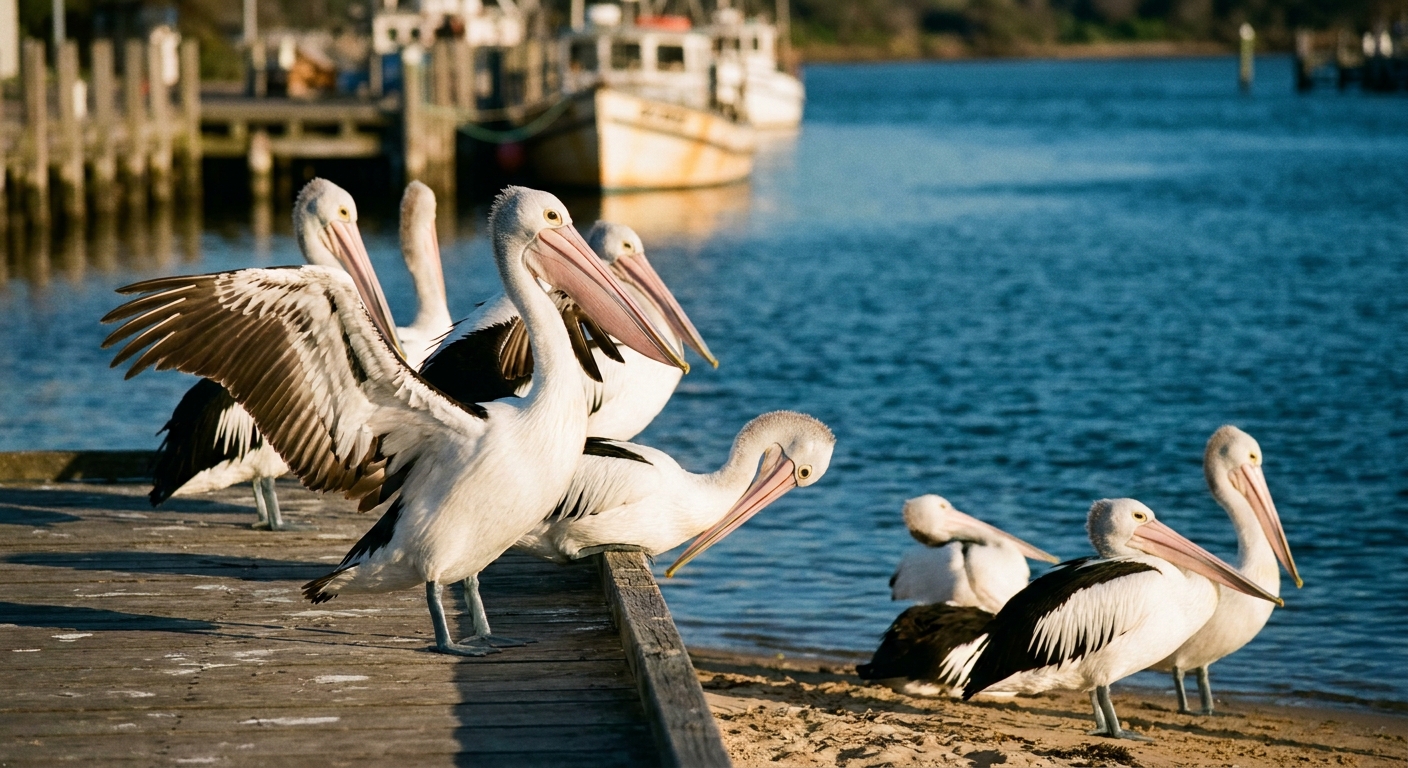
Cross the bridge from Phillip Island to San Remo just before midday and you will see them lined up along the foreshore like commuters waiting for a train: Australian pelicans, dozens of them, absurdly large and completely unbothered by the crowd gathering to watch. They know what time it is. Lunch is at noon, it has been since 1985, and nobody is ever late.
What exactly is an Australian pelican?
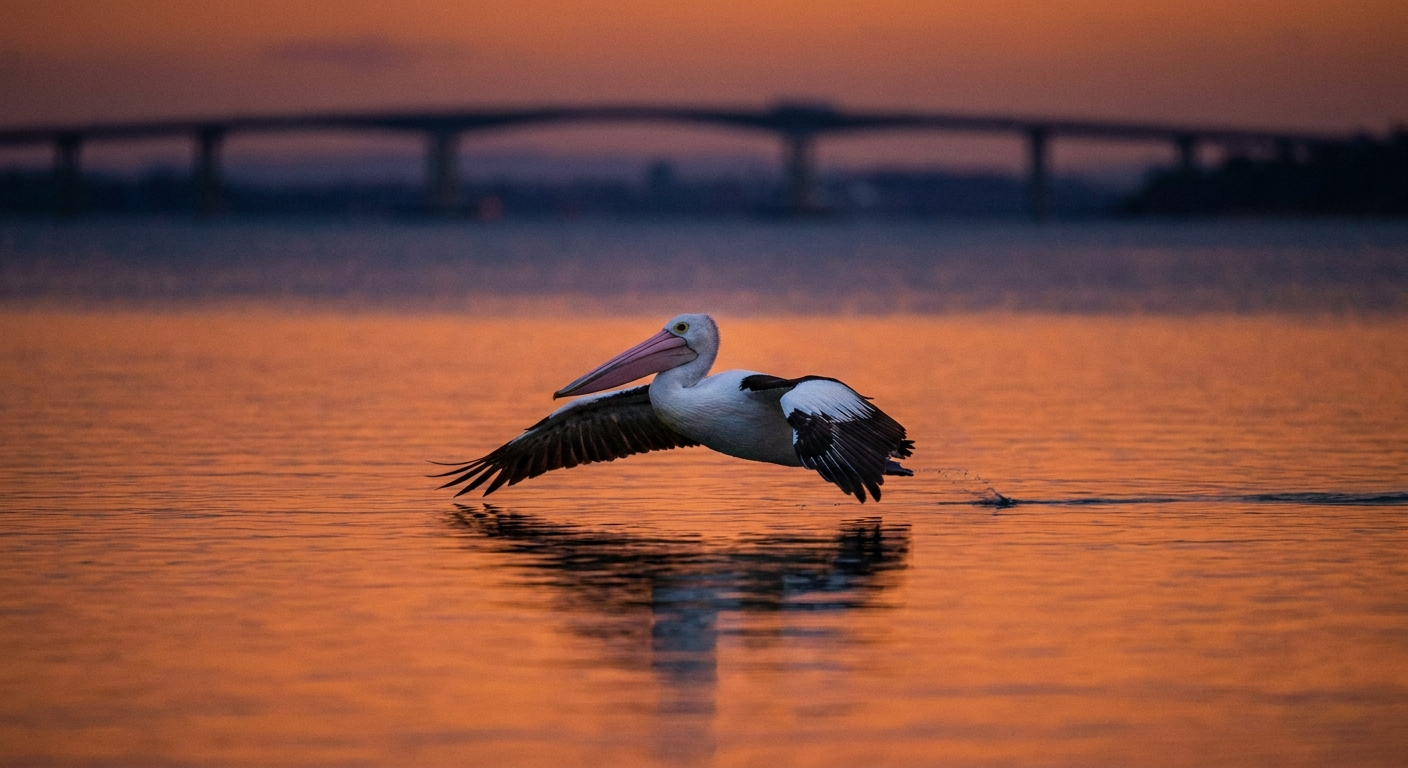
The Australian pelican (Pelecanus conspicillatus) is one of the biggest flying birds in the country, with a wingspan of up to two and a half metres and a bill that is among the longest of any bird in the world. White body, black wings and that enormous pink pouch of a bill, which it uses like a net to scoop up fish. On the water they are stately; in the air they soar for hours with barely a wingbeat.
A tradition that started with fish scraps
The San Remo pelican feeding began when local fishermen started tossing offcuts to the birds that hung around the boats, and the pelicans, being pelicans, made it a habit. The formal feeding has run daily at 12 noon since 1985, beside the pier and the San Remo Fisherman’s Co-op on the mainland side of the bridge, with a short talk about the birds, and it is free. It is one of those small local rituals that has quietly become a highlight of the island for families, photographers and anyone who appreciates a bird with a sense of occasion.
Life on the wing
Pelicans are superb long distance fliers, riding thermals to cover huge distances between wetlands, and they breed in colonies on islands and remote lakes far from here. The birds at San Remo are mostly visitors making the most of a reliable feed. Watch them land: a bird that size coming into a calm channel with feet out like water skis is one of the more entertaining sights in Victoria.
Where to see them on Phillip Island
San Remo foreshore, beside the pier and the Fisherman’s Co-op on the mainland side of the bridge, at 12 noon daily. Arrive a little early to watch the queue form. Pelicans also loaf around the jetties at Cowes and Rhyll and cruise the channel at sunset, when the light through those enormous wings is worth the drive on its own.
Fast facts for your stay
- One of the largest flying birds in Australia, with a wingspan of up to 2.5 metres.
- Its bill is among the longest of any bird on Earth.
- Fed daily at 12 noon on the San Remo foreshore, a tradition that grew from fishermen sharing scraps and has run formally since 1985.
- The feeding comes with a short talk and is free.
- Pelicans ride thermals for hours and travel long distances between waterways.
- They breed in colonies far from San Remo; the local birds are regulars, not residents.
- Best light for photos is the channel at sunset.
Seeing them from Zoarii
Zoarii sits on 3.5 acres above Berrys Beach, about twenty minutes from San Remo. The pelicans make a perfect lazy lunch outing: watch the feed, eat fish and chips on the foreshore, and be back at the house for the afternoon sauna and a plunge. Wildlife watching does not get more comfortable, or more punctual.
Part of our Island Nature series, after the Cape Barren geese, swamp wallaby, little penguins, short-tailed shearwaters, Australian fur seals, hooded plovers, koalas, echidnas. Next: more Island Nature stories as the seasons turn.
Two bedrooms, private sauna, cold plunge and 3.5 acres above Berrys Beach.