Walk down to Berrys Beach from Zoarii and you may pass, without ever knowing it, one of the rarest birds in Victoria. The hooded plover nests on the open sand above the high tide line, its eggs coloured exactly like the beach, and its entire future depends on people like you and me not stepping on them. It is small, elegant, and quietly extraordinary.
What exactly is a hooded plover?
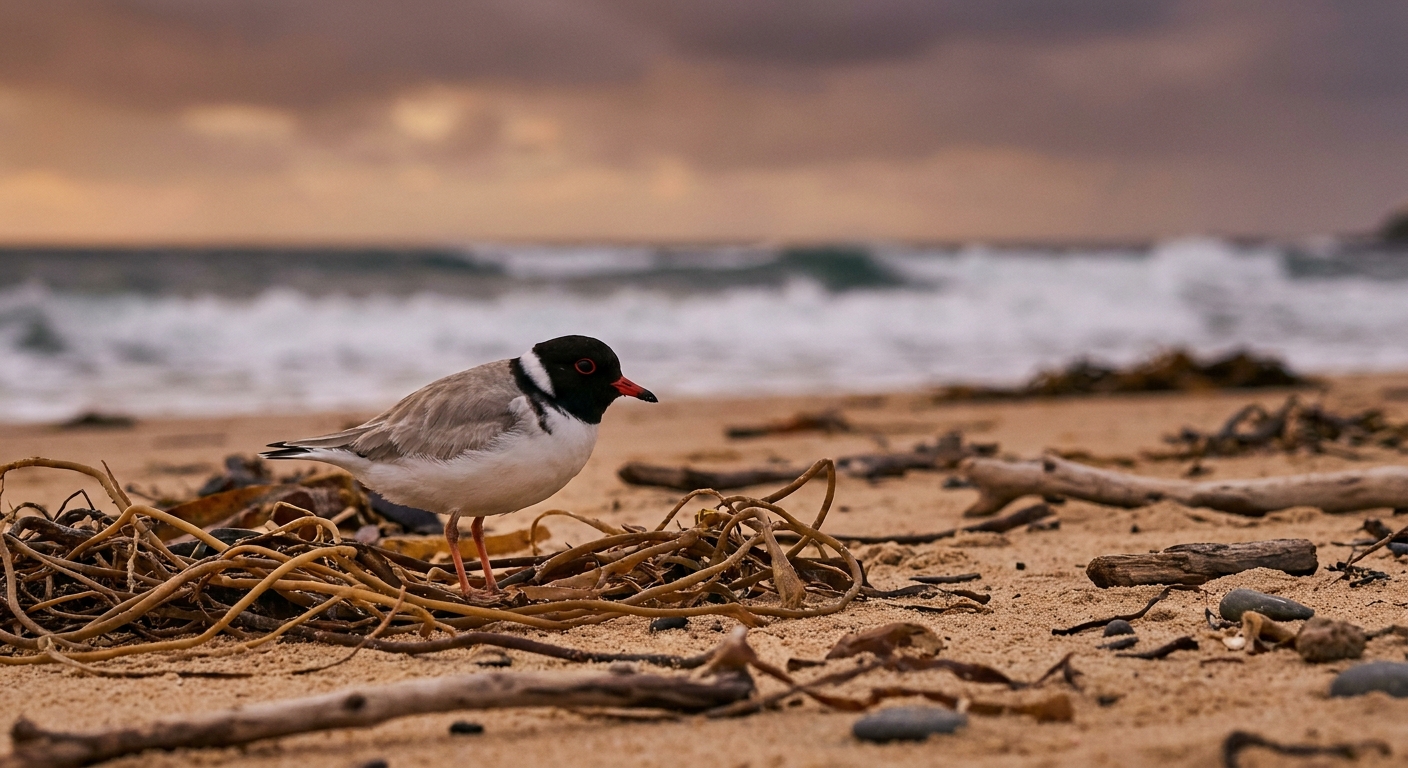
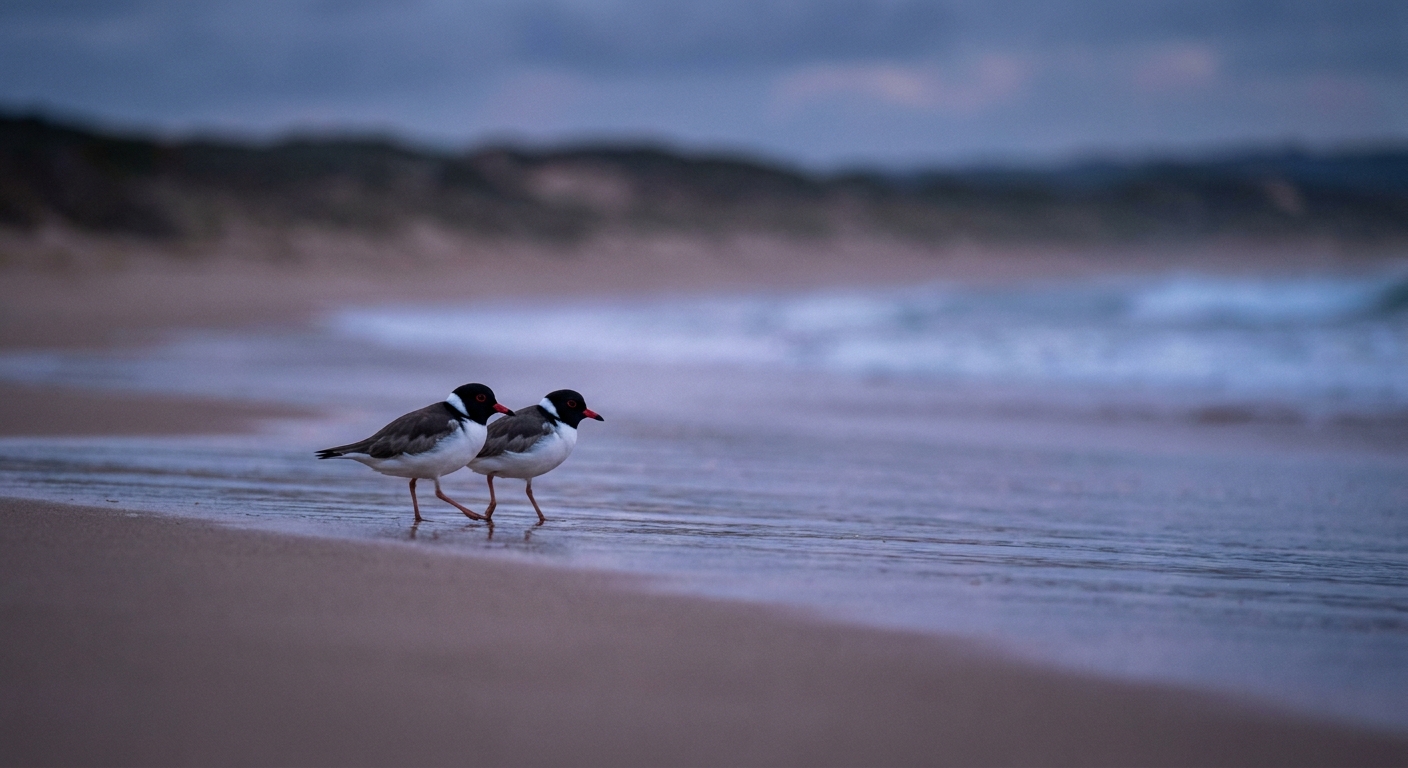
The hooded plover (Thinornis cucullatus) is a small shorebird about 20 centimetres long with a black hood, white collar, pale grey-brown back and a red bill tipped in black, set off by a red ring around the eye. It lives only on the beaches of southern Australia, and the eastern population numbers only a few thousand birds. The 2024 count found only 682 birds in all of Victoria, which is why the species is listed as Vulnerable both nationally and in Victoria and why volunteers on Phillip Island spend their summers watching over the nests.
A nest that is only a scrape in the sand
Hooded plovers breed from around August to March, right through the busiest beach months. The nest is nothing more than a shallow scrape in the sand or among the dune plants, usually above the high tide line, and the eggs are speckled to vanish against it. Chicks hatch fluffy and flightless and spend about five weeks feeding at the water’s edge before they can fly. During that time they are vulnerable to everything: dogs, foxes, gulls, high tides, and feet.
How a fox free island helps
Phillip Island’s fox eradication, the same program that lets geese and wallabies graze in the open, removed one of the plover’s deadliest predators. It is part of why the island’s beaches remain some of the most important hooded plover habitat in the state. Phillip Island Nature Parks and volunteers fence off active nests with temporary rope and signs each season, and it works, provided beachgoers respect the ropes.
Where to see them on Phillip Island
Berrys Beach itself, plus the other surf beaches along the south coast from Cape Woolamai to the Nobbies. Look for a small pale bird running at the water’s edge and stopping dead, then running again. If you see roped off areas or signs on the beach, that is a nest: give it a wide berth, walk on the wet sand, keep dogs off the beach entirely during nesting season, and never linger near the dunes.
Fast facts for your stay
- A small shorebird about 20 centimetres long with a black hood, white collar and red bill tipped in black.
- Listed as Vulnerable nationally and in Victoria; only a few thousand remain in eastern Australia and just 682 were counted in Victoria in 2024.
- Nests on open sand above the high tide line from about August to March, the peak beach season.
- Eggs are camouflaged to match the sand and are almost impossible to see.
- Chicks are flightless for around five weeks and feed at the water’s edge.
- Phillip Island Nature Parks and volunteers rope off active nests each season.
- Walk on the wet sand, respect the ropes and keep dogs away during nesting season.
Seeing them from Zoarii
Zoarii sits on 3.5 acres directly above Berrys Beach, which makes this the most local story in the series. Take the walk down before the sauna, watch the tide line for a small bird that runs and stops, and if you see the ropes, know that a family is trying to make it through the summer a few metres away. Sharing a beach with a bird this rare is a privilege, and it costs nothing but care. Wildlife watching does not get more comfortable, or more meaningful.
Part of our Island Nature series, after the Cape Barren geese, swamp wallaby, little penguins, short-tailed shearwaters, Australian fur seals. Next: the koalas of the Conservation Reserve.
Two bedrooms, private sauna, cold plunge and 3.5 acres above Berrys Beach.