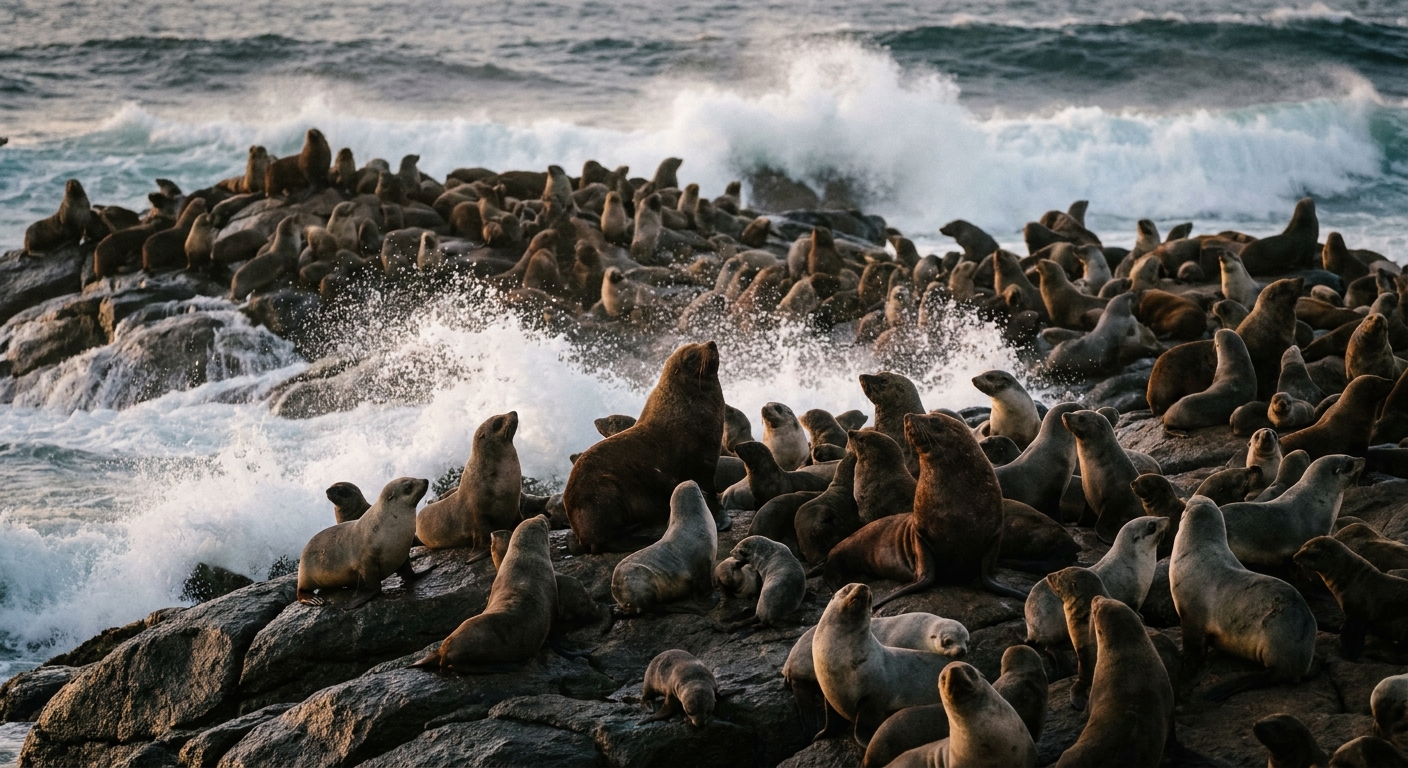
On a still evening at the Nobbies you can hear them before you see them: a low, constant bark rolling in across the water from a smear of dark rock on the horizon. That is Seal Rocks, and it is home to thousands of Australian fur seals, one of the largest colonies of the species anywhere in the country. They are, without question, the loudest neighbours on Phillip Island.
What exactly is an Australian fur seal?
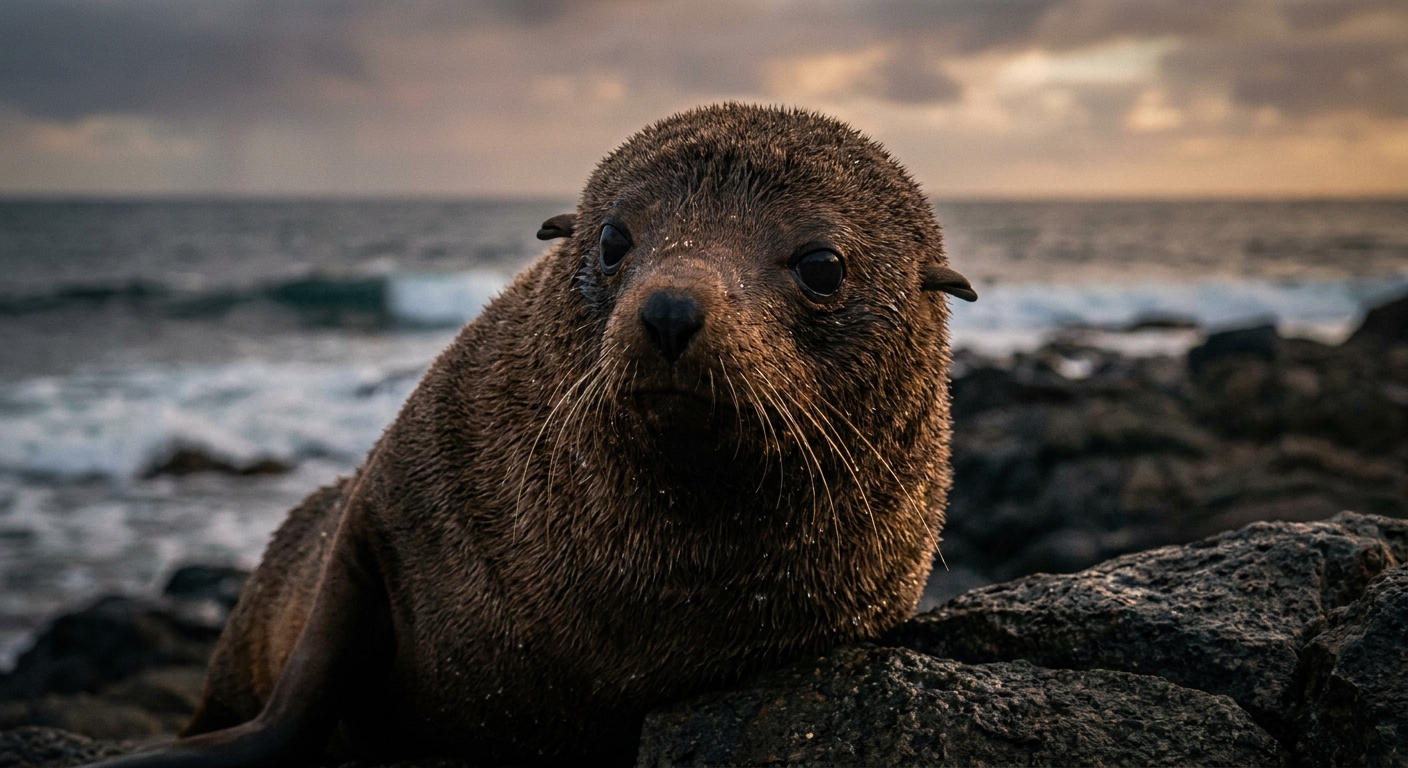
The Australian fur seal (Arctocephalus pusillus doriferus) is the largest of Australia’s fur seals. Bulls can weigh more than 300 kilograms and stretch past two metres, while females are far smaller, closer to 80 kilograms. They have dense chocolate to grey-brown fur, pointed snouts, small external ears and the unhurried confidence of an animal that has nothing to prove on land and everything to prove in the water, where they are astonishingly fast.
Hunted hard, then home again
In the 1800s sealers hunted Australian fur seals so heavily for pelts and oil that the population crashed from several hundred thousand to around 20,000. Protection came in the twentieth century, with Seal Rocks reserved in 1928 and killing banned in Victorian waters in 1975, and the colony has been rebuilding ever since. Today around 20,000 seals use Seal Rocks, roughly a quarter of the entire species, with several thousand on the rocks at any one time. Pups are born in late spring and early summer. It is one of the great quiet recoveries in Australian wildlife, and it happened two kilometres from the end of the island.
Life on the rocks
Fur seals haul out onto Seal Rocks to rest, moult, breed and raise pups, and head out into Bass Strait to hunt fish, squid and octopus. The bulls arrive first in spring and hold territories with a lot of noise and the occasional brawl. The pups are born from November and spend their first months learning to swim in the rock pools before the open sea. The sound and the smell carry a long way, which is exactly how you know the colony is thriving.
Where to see them on Phillip Island
The Nobbies Centre at the western tip of the island has boardwalks with telescopes and live cameras trained on Seal Rocks, and on a clear day you can pick out individual seals from the cliffs. Wildlife cruises from Cowes run out to the rocks themselves in season and get you close enough to smell them. Either way, take a jacket: the Nobbies is the windiest corner of the island.
Fast facts for your stay
- Around 20,000 seals use Seal Rocks, about a quarter of the entire species, making it the largest colony in Australia, under two kilometres off the Nobbies.
- Bulls can exceed 300 kilograms; females are roughly a quarter of that.
- Hunted so heavily in the 1800s that numbers crashed to around 20,000; protected since 1928 at Seal Rocks and recovering.
- Pups are born from around November each year.
- They hunt fish, squid and octopus in Bass Strait and can dive deep for them.
- You can hear the colony from the Nobbies on a still day.
- Boardwalk telescopes and live cameras at the Nobbies Centre give the closest free view.
Seeing them from Zoarii
Zoarii sits on 3.5 acres above Berrys Beach, about fifteen minutes from the Nobbies. The seals suit a late afternoon: sauna first, then the boardwalks as the light goes gold and the barking carries across the water, then home to the fire. Wildlife watching does not get more comfortable.
Part of our Island Nature series, after the Cape Barren geese, swamp wallaby, little penguins, short-tailed shearwaters. Next: the hooded plover, the rarest bird on your beach.
Two bedrooms, private sauna, cold plunge and 3.5 acres above Berrys Beach.